FPGA Modeling: Eddy Currents & Hysteresis
Publication: 2025 IEEE International Instrumentation and Measurement Technology Conference (I2MTC), July 2025.
Partners: UQTR.
Introduction
In precision loudspeaker design, electromagnetic motor behavior is often oversimplified. However, eddy currents and magnetic hysteresis within the steel pole pieces introduce complex nonlinearities and frequency-dependent inductance.
This project presents an FPGA-based implementation of a “white-box” model capable of simulating these phenomena in real-time at a sampling frequency of 1 MHz.
Theoretical Approach: The Method of Lines (MoL)
To model flux diffusion within the axisymmetric core, we utilize the Method of Lines. Unlike conventional Finite Element Methods (FEM), MoL discretizes space while keeping time as a continuous variable.
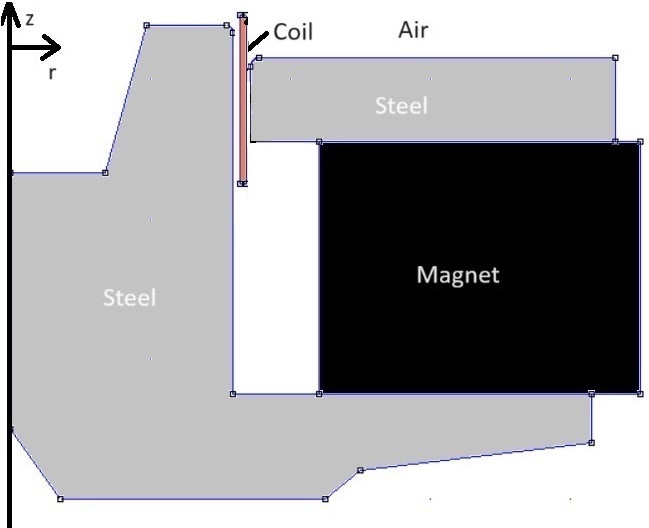
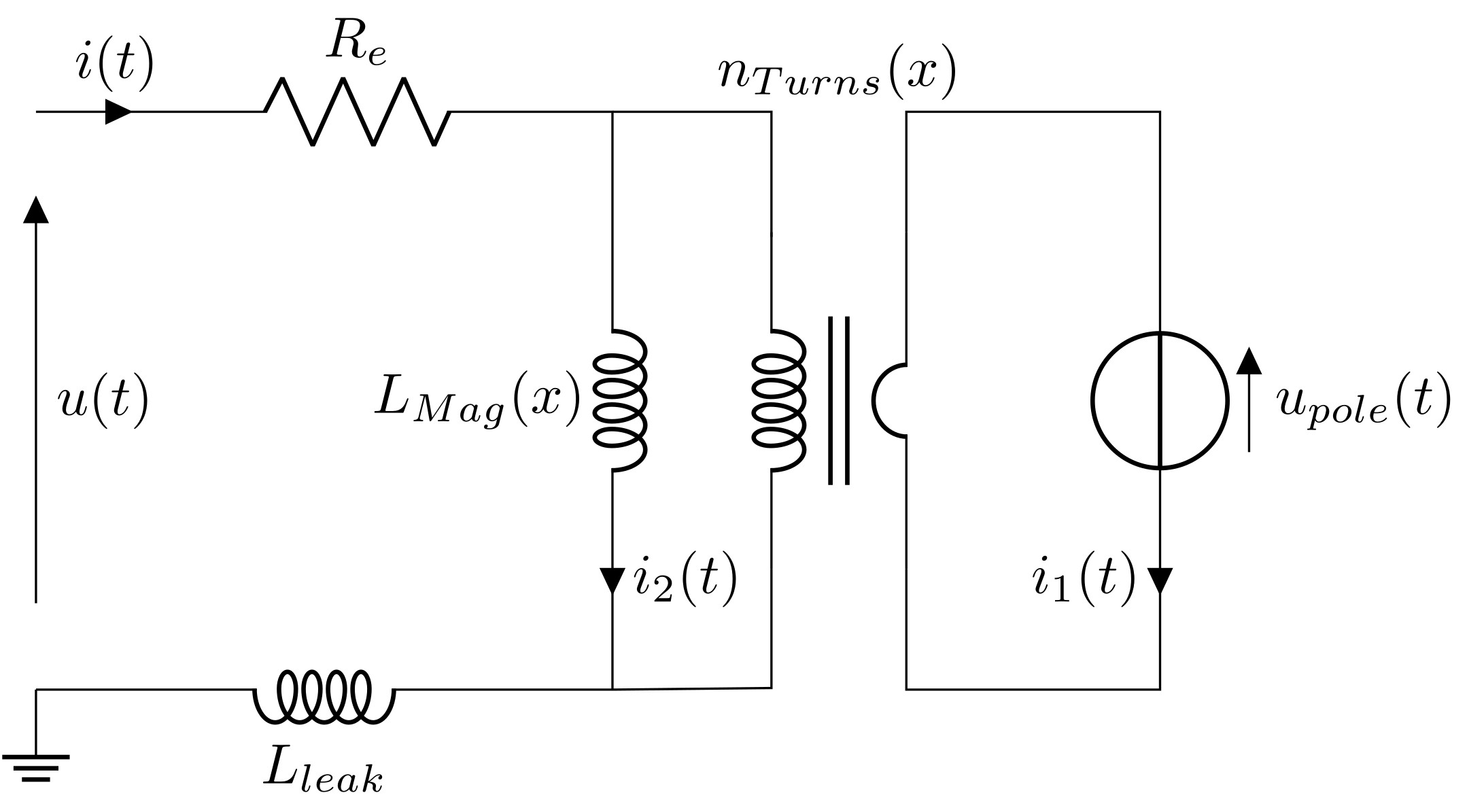
Spatial Discretization
The radial domain of the core is divided into points. The diffusion equation derived from Maxwell’s equations is transformed into a system of Ordinary Differential Equations (ODEs):
FPGA Architecture & Resources
The implementation was carried out on a Xilinx Kintex-7 FPGA. The challenge was solving 128 ODEs in less than using massive parallelism and pipelined Float32 arithmetic.
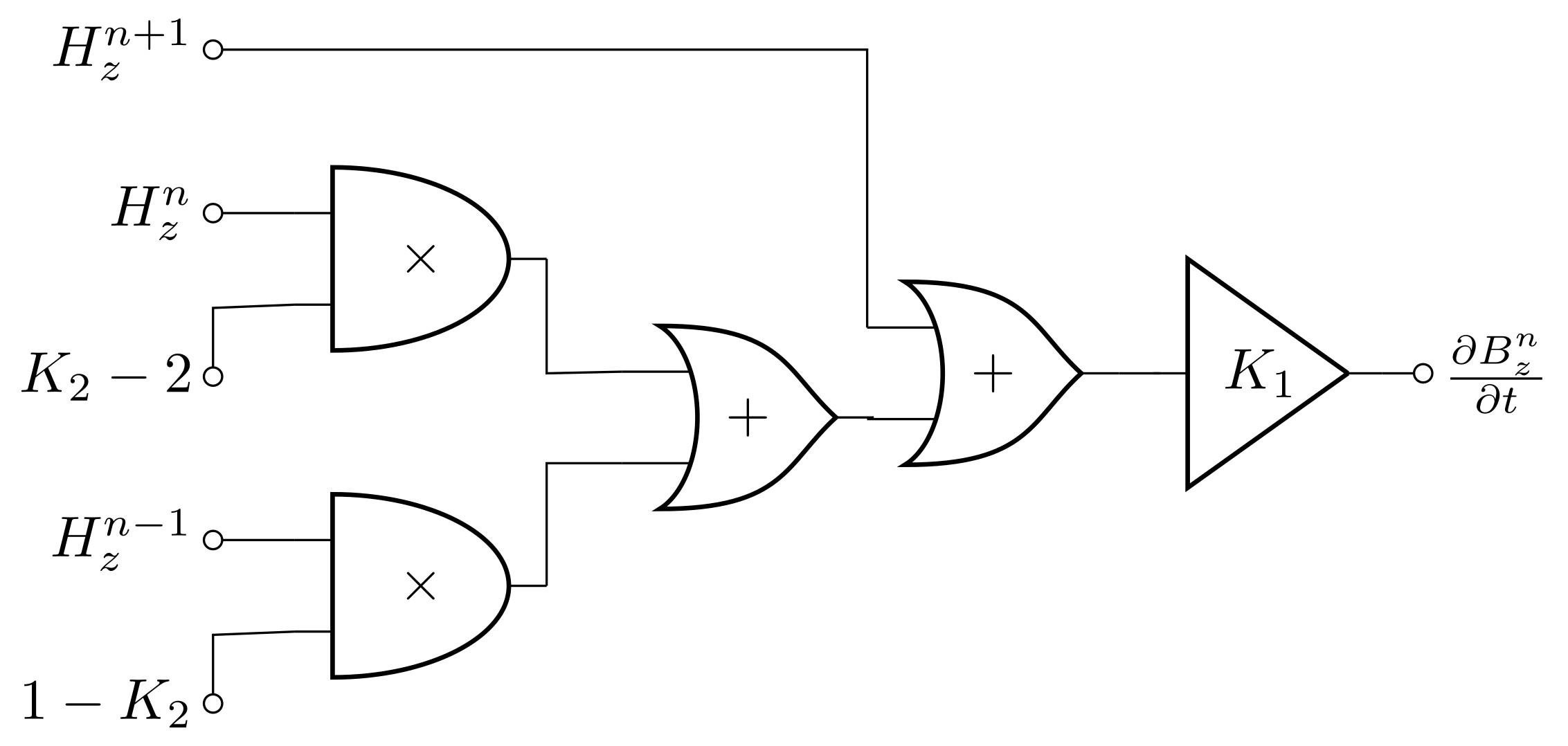
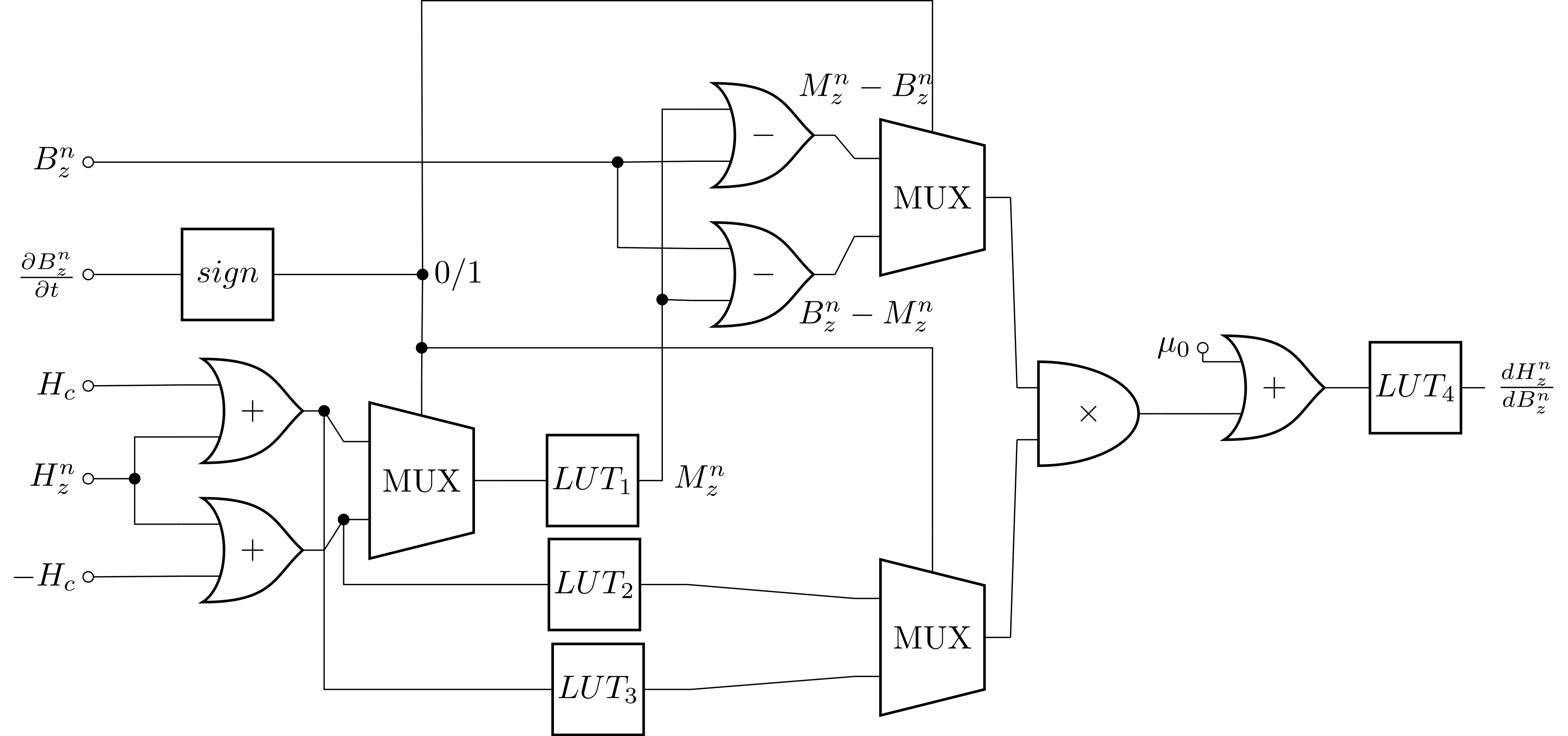
Resource Utilization (128 points)
| Clock | BRAMs | DSPs | LUTs | Registers |
|---|---|---|---|---|
| 200 MHz | 72 | 75 | 57,916 | 36,082 |
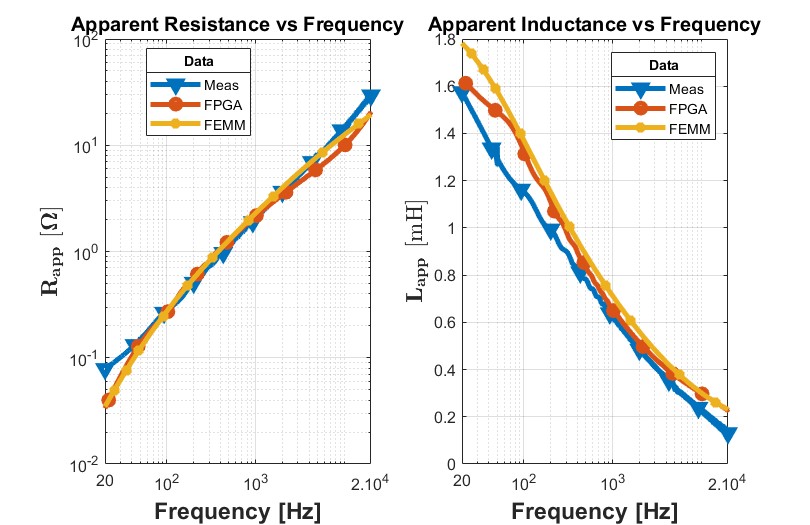
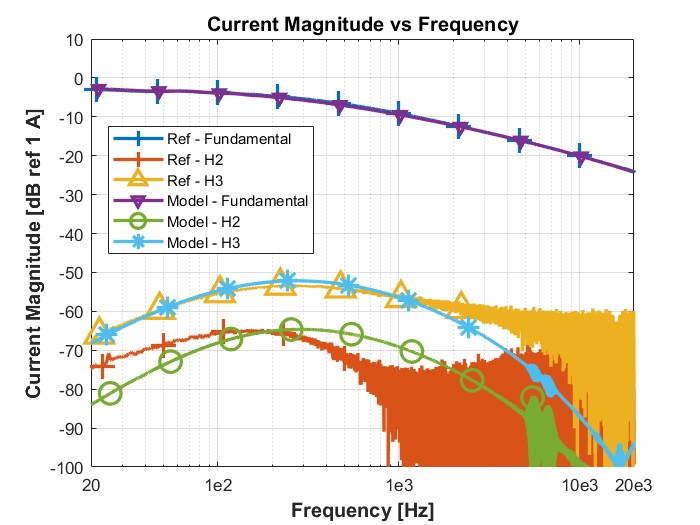
Results & Virtual Instrumentation
References and Publications
| Type | Description |
|---|---|
| Journal (IEEE I2MTC) | Munroe, O., et al. “Real-Time FPGA Estimation of Eddy Currents and Hysteresis in Axisymmetric Inductors”, IEEE I2MTC 2025. DOI:10.1109/I2MTC62753.2025.11079216 |